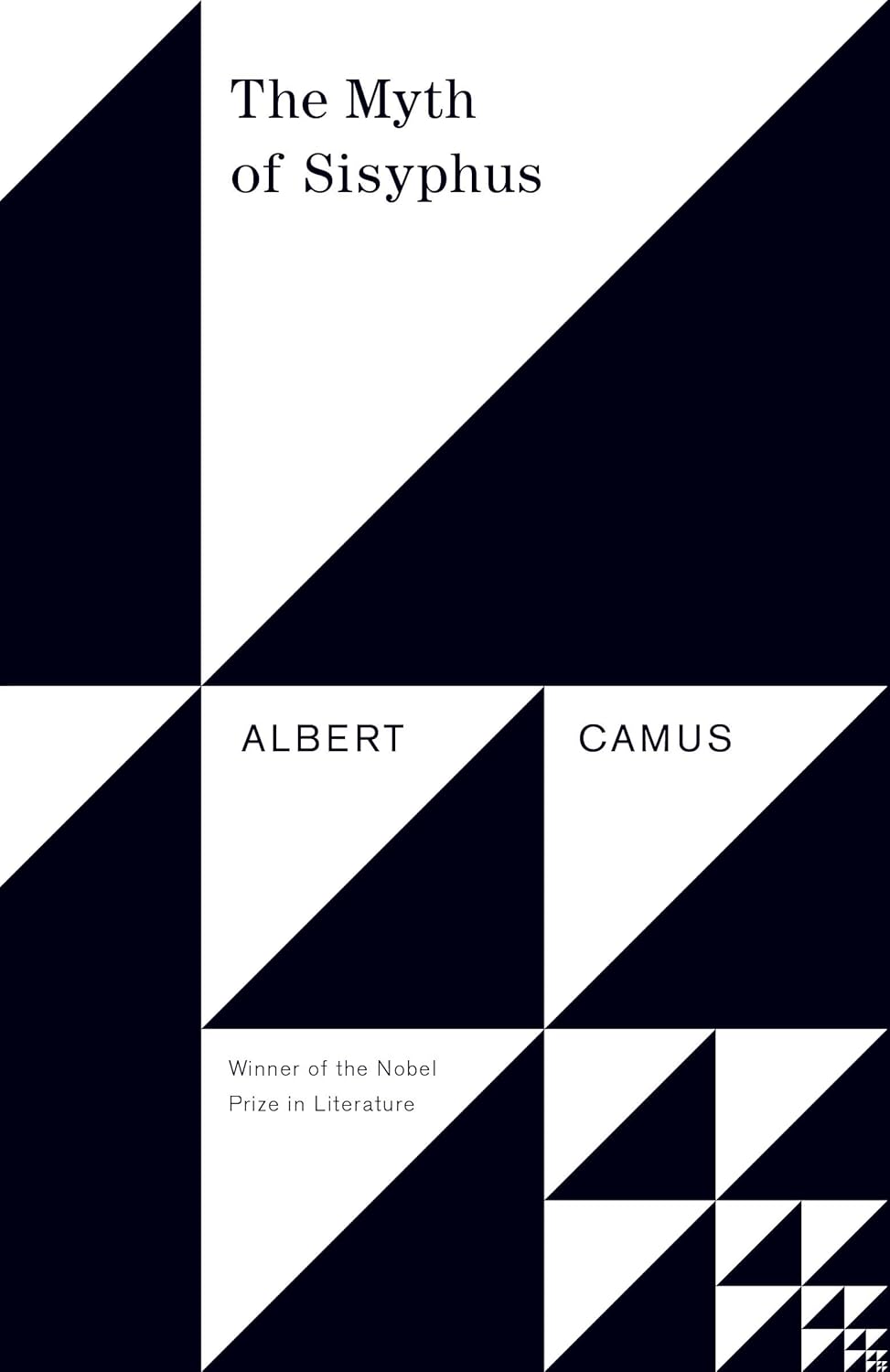
“I leave Sisyphus at the foot of the mountain! One always finds one’s burden again. But Sisyphus teaches the higher fidelity that negates the gods and raises rocks.“
-Albert Camus
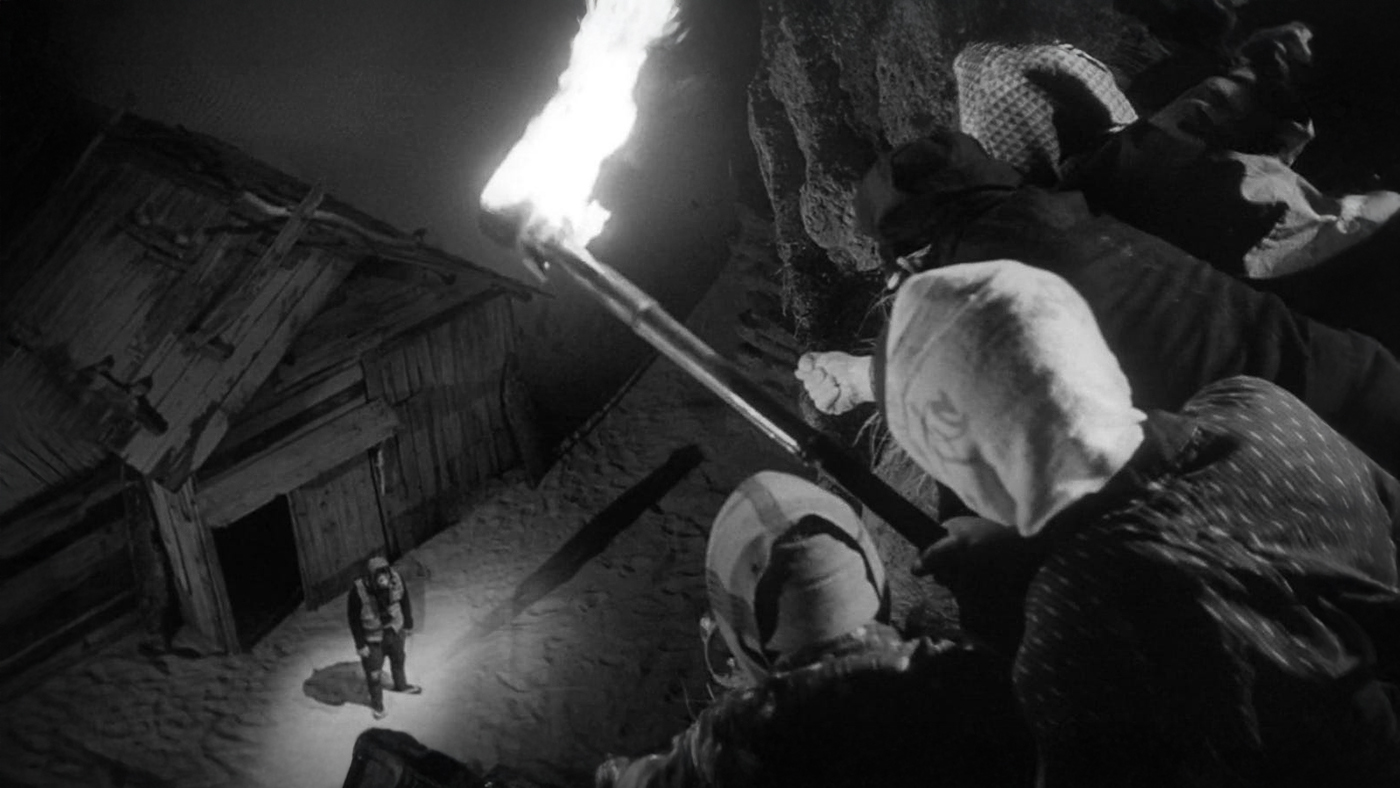
“Is this an inspection?… Inspection? Not really. Were you expecting one?”
The only thing more tragic then being condemned to endlessly roll a huge boulder up a steep hill is trying to dig your way out of the infinite grains of sand that surrounds you. Or perhaps there is no tragedy in these absurdities. Perhaps it is only our dispositions towards them which makes them truly tragic. Hiroshi Teshigahara’s Woman in the Dunes is a suffocating, hypnotic film about entrapment, survival, and, ultimately, Pushing on no matter the circumstance. It’s a story that unfolds like a fever dream, trapping both its protagonist and its audience in an existential paradox—one that mirrors Albert Camus’ vision of the absurd. The film, based on Kobo Abe’s novel, echoes Camus’ The Myth of Sisyphus in its portrayal of a man caught between defiance and acceptance, struggling against a world that seemingly offers no meaning beyond the struggle itself.
“Even if it is a lie, it helps to have hope that tomorrow things will change.”
Camus defines the absurd as “the conflict between human beings search for meaning and the universe’s silent indifference”. Woman in the Dunes drops its audience straight into that philosophical conflict. Jumpei Niki, an entomologist, finds himself trapped in a sinking pit, forced to shovel sand day after day with no escape in sight. His labor is endless, repetitive, and, on the surface, completely meaningless. The villagers, who watch from above, are indifferent, much like the sand itself that surrounds him. The villagers have no sympathy; to them, this is simply the way things are.
It’s impossible not to see Sisyphus in Jumpei, a man condemned to roll his boulder up a hill, only to watch it roll back down again. The sand is relentless, swallowing everything in its path, forcing Jumpei to either fight against it or surrender to it. In the beginning, he resists. He plots his escape. He clings to the idea that he belongs somewhere else. But the absurd has no concern for human desires. The sand keeps falling. In the book Jumpei describes this saying, “But everyday life was exactly like the headlines. And so, everybody, knowing the meaninglessness of existence, sets the center of his compass at his own home.”
“I don’t get it. Doesn’t all this seem pointless to you? Are you shoveling sand to live or living to shovel sand?”
Camus argues that “the only way to confront the absurd is to acknowledge it fully—not to seek escape, but to live within it without illusion”. This aligns with Jumpei’s arch. Over time, his frantic resistance slows. He starts to see his labor not as a punishment, but as something inevitable—not something to be escaped, but something to be endured. His relationship with the woman shifts from reluctant cooperation to something deeper, more intimate. And finally, when the chance to escape presents itself, he chooses to stay.
This is where Jumpei becomes, in Camus’ terms, an absurd hero. His acceptance is not submission; it is a form of rebellion it is a form of freedom. Camus writes in The Myth of Sisyphus, “The struggle itself toward the heights is enough to fill a man’s heart. One must imagine Sisyphus happy.” Jumpei, too, finds something in the struggle, something that makes the endless repetition bearable. His life is no longer defined by escape, but by presence.
_____
Conclusion
Woman in the Dunes is a parable of the absurd, asking ‘what we do when faced with a meaningless, inescapable reality’. Do we resist? Do we despair? Or do we, like Camus’ Sisyphus, find a way to smile as we push the boulder?
Jumpei’s fate is not a tragedy. It is, in its own quiet way, a victory. He does not escape the sand, but he stops needing to and in this victory Camus says, “He too concludes that all is well. This universe henceforth without a master seems to him neither sterile nor futile. Each atom of that stone, each mineral flake of that night filled mountain, in itself forms a world. The struggle itself toward the heights is enough to fill a man’s heart. One must imagine Sisyphus happy.”
Reading List
The Myth of Sisyphus by Albert Camus